
Feelings Activity: Tell a Two-Scene Story
These four pictures show a welcome, a balloon moving away, scattered blocks and reading on a cushion. The child’s mouth, eyebrows and hands offer clues for a story. A smile or frown can have more than one explanation; use the visible situation and your own ideas rather than looking for a single correct feeling.
4 coloring pages · Mixed difficulty
What you need
- Two of the four coloring pages; choose the situations you want to compare
- One blank sheet and a pencil
- Crayons or colored pencils
Coloring pages in this activity
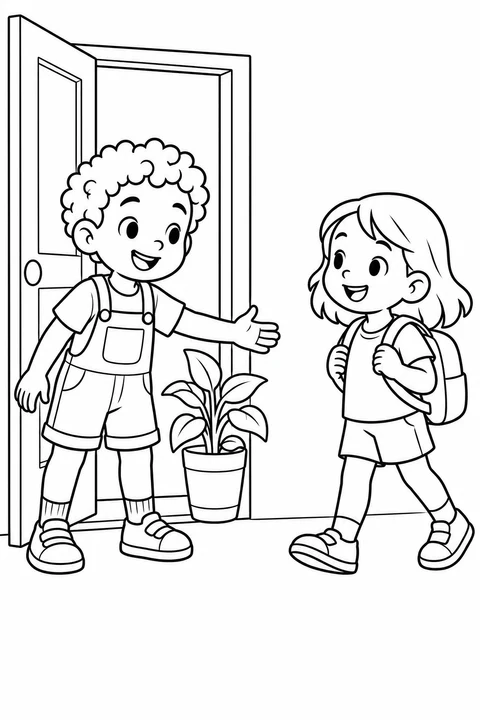
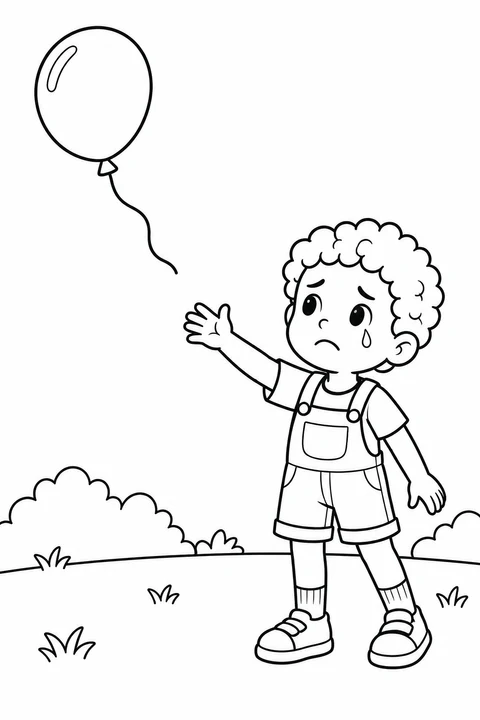
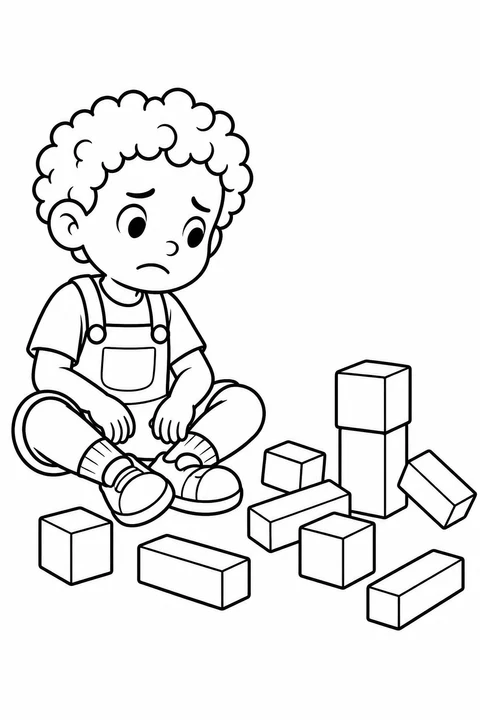
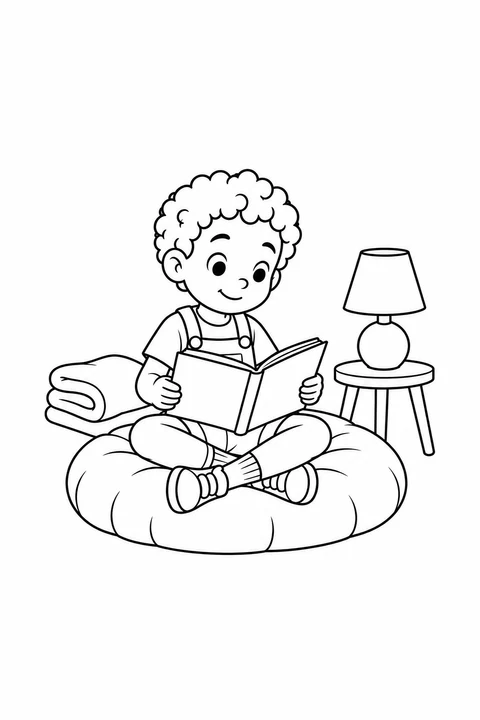
Try the activity
Choose two different situations
Open the picture chooser. All four start selected; untick two and keep the pair you want. Confirm, check your print list, then print on A4 or Letter paper or download its PDF. Two chosen pictures use two pages; the optional cover adds a page. You provide the extra blank sheet yourself.
Find a face or body clue
On each picture, point to one visible line or gesture: a mouth corner, an eyebrow, a hand or the way the child sits or stands. Describe what is happening in the picture. Suggest a feeling the child might have, then try another explanation if you want. You do not need to agree on one answer.
Make a first-and-later story
Divide your blank sheet into two spaces. In the first, draw a simple version of the child and a useful object from one chosen picture. In the second, draw a scene using the other picture. Add a short sentence or ask a grown-up to write your words. Invent what could happen between them; the new story is your idea, not something proven by the pictures.
Color and show your clues
Color the two chosen pages in any colors you like. Put them beside your two-scene story and show the face or posture clues you used. You may tell the made-up story or simply point to a detail. Talking about your own life is optional, and there is no required color for a feeling.
Another idea
Change the order of the same two pictures and try a different story. Keep a new explanation when it fits the visible clues. The finished result is two colored pages and one two-scene story sheet; completing every area is optional.