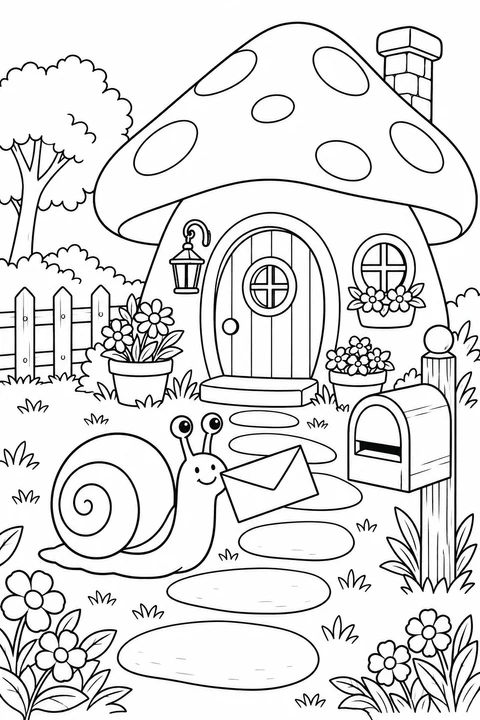
Mail for the Mushroom Cottage
detailed
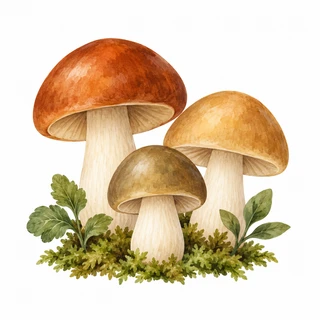
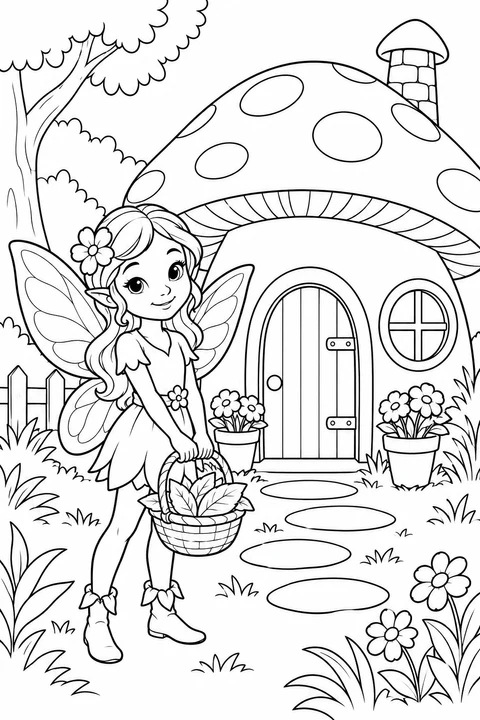
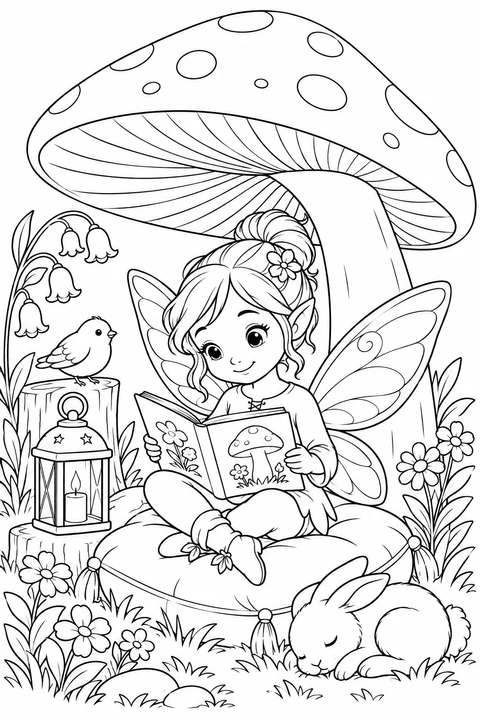
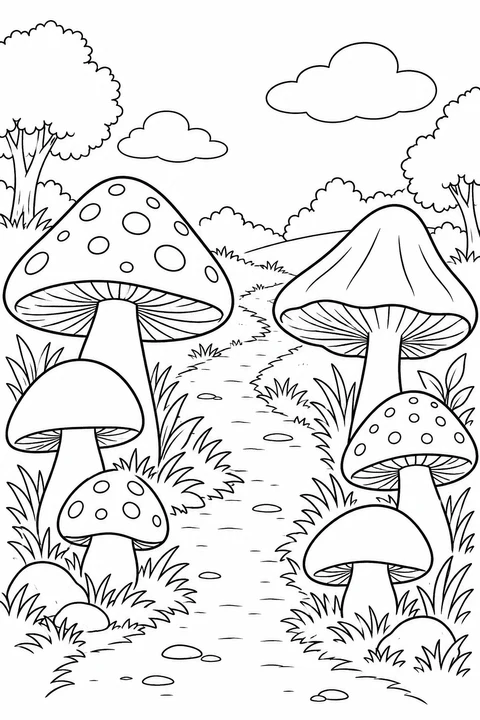
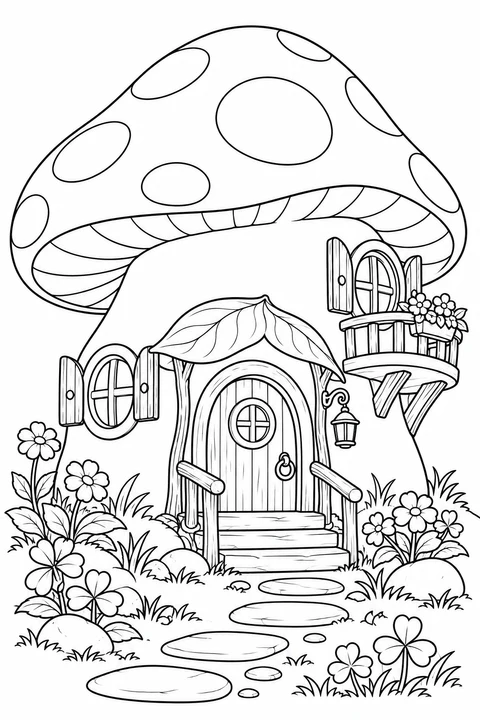
A large plain cap offers broad spaces to color, while clustered mushrooms, leaves and winding paths add smaller details. Other pictures turn mushrooms into homes or shelters for imaginary characters. The natural-looking shapes and storybook scenes are different ways to explore the same theme.
detailed
medium
easy
detailed
medium
detailed
medium
medium
medium
medium
medium
medium
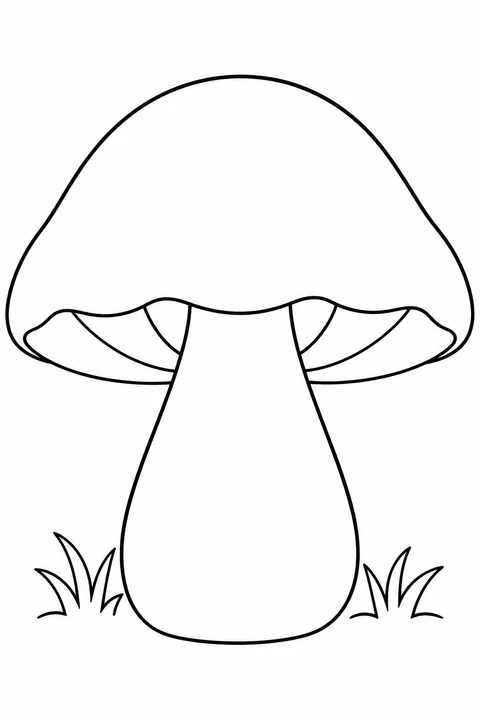
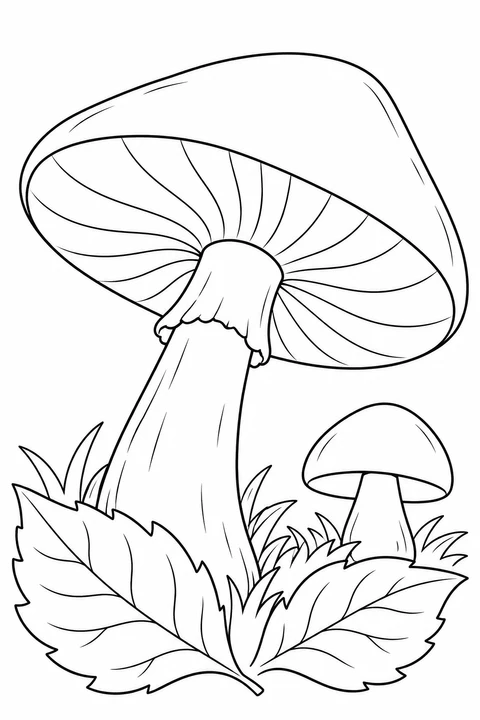
A single mushroom gives you large spaces; the tilted cap exposes narrower shapes underneath.
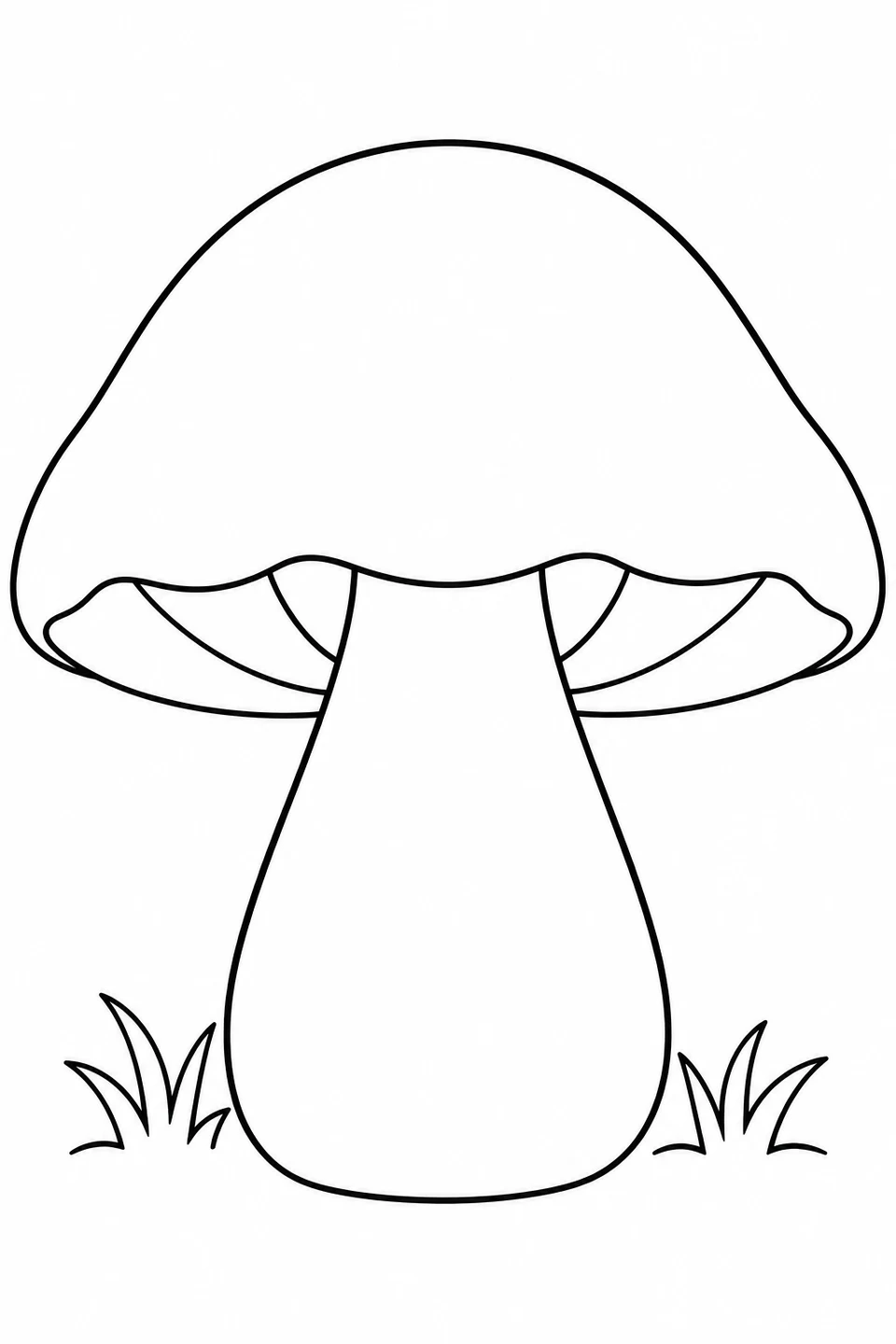
The plain cap and wide stem suit broad pencil strokes. There are no spots to work around.
Mushroom with a Broad Plain Cap →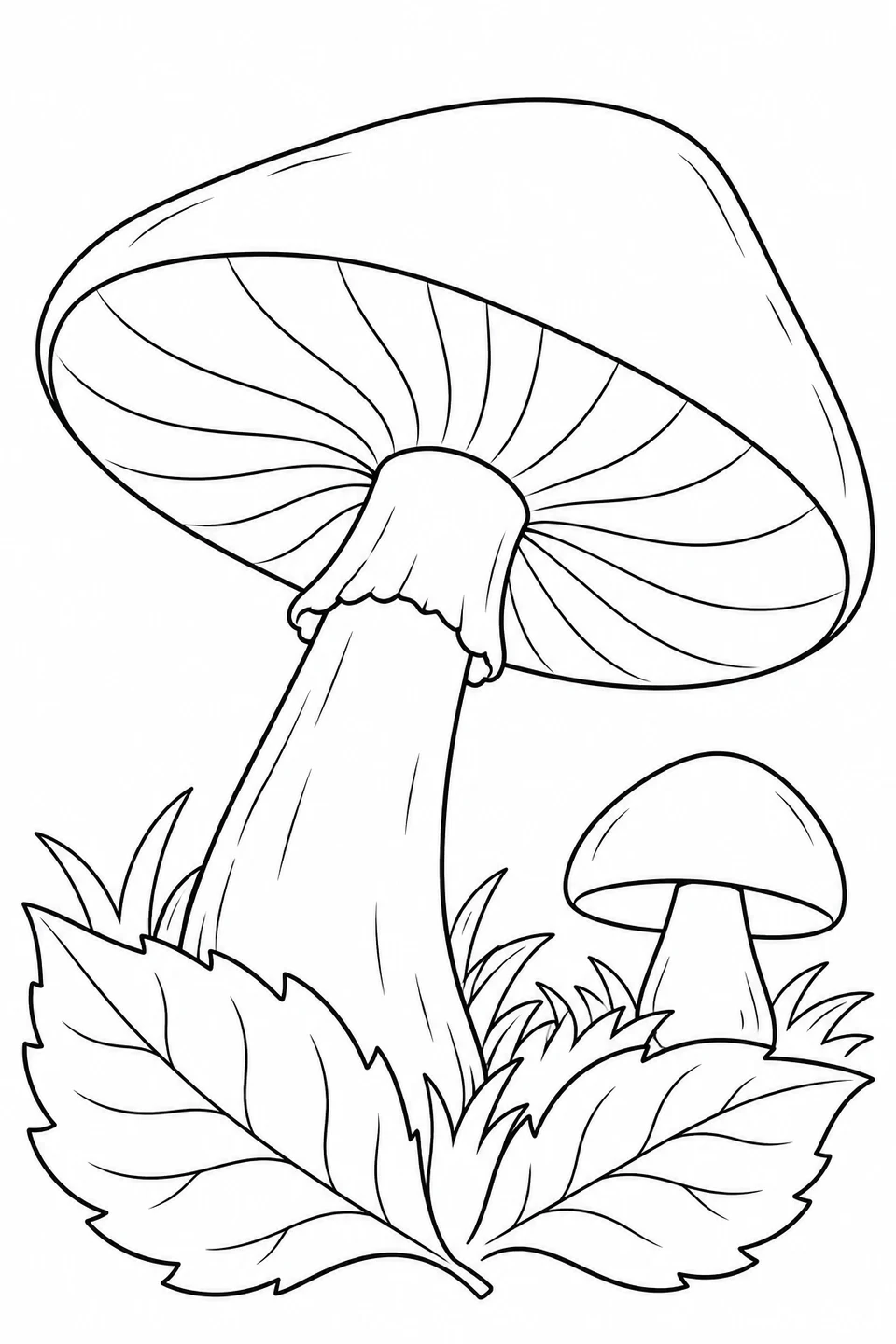
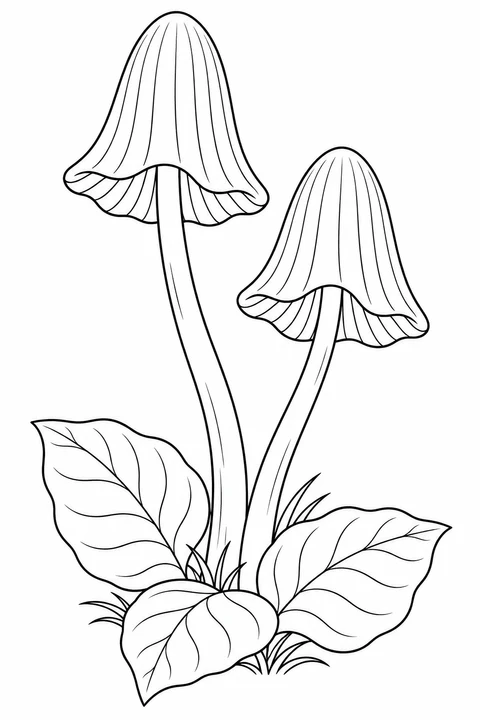
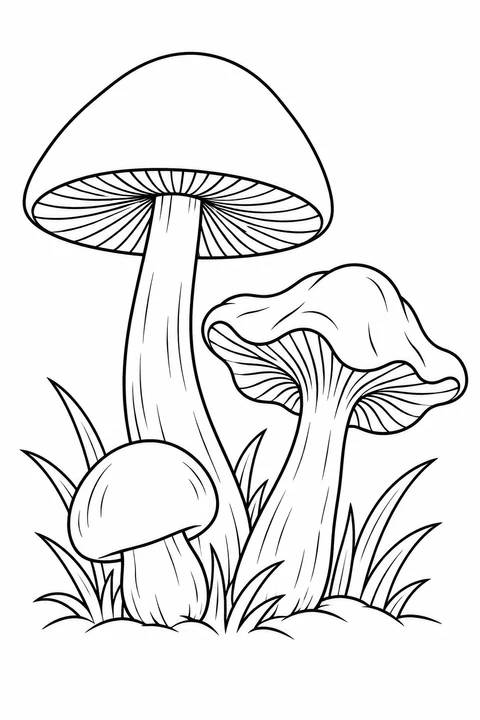
The tilted mushroom has curved lines beneath its cap, a smaller mushroom and veined leaves. Choose it for slower detail work.
Mushroom Underside and a Small Companion →Print the original line drawing linked below. The numbered areas match the color key and steps; use the colored example as a starting point, then choose your own colors if you prefer.
Digital coloring example
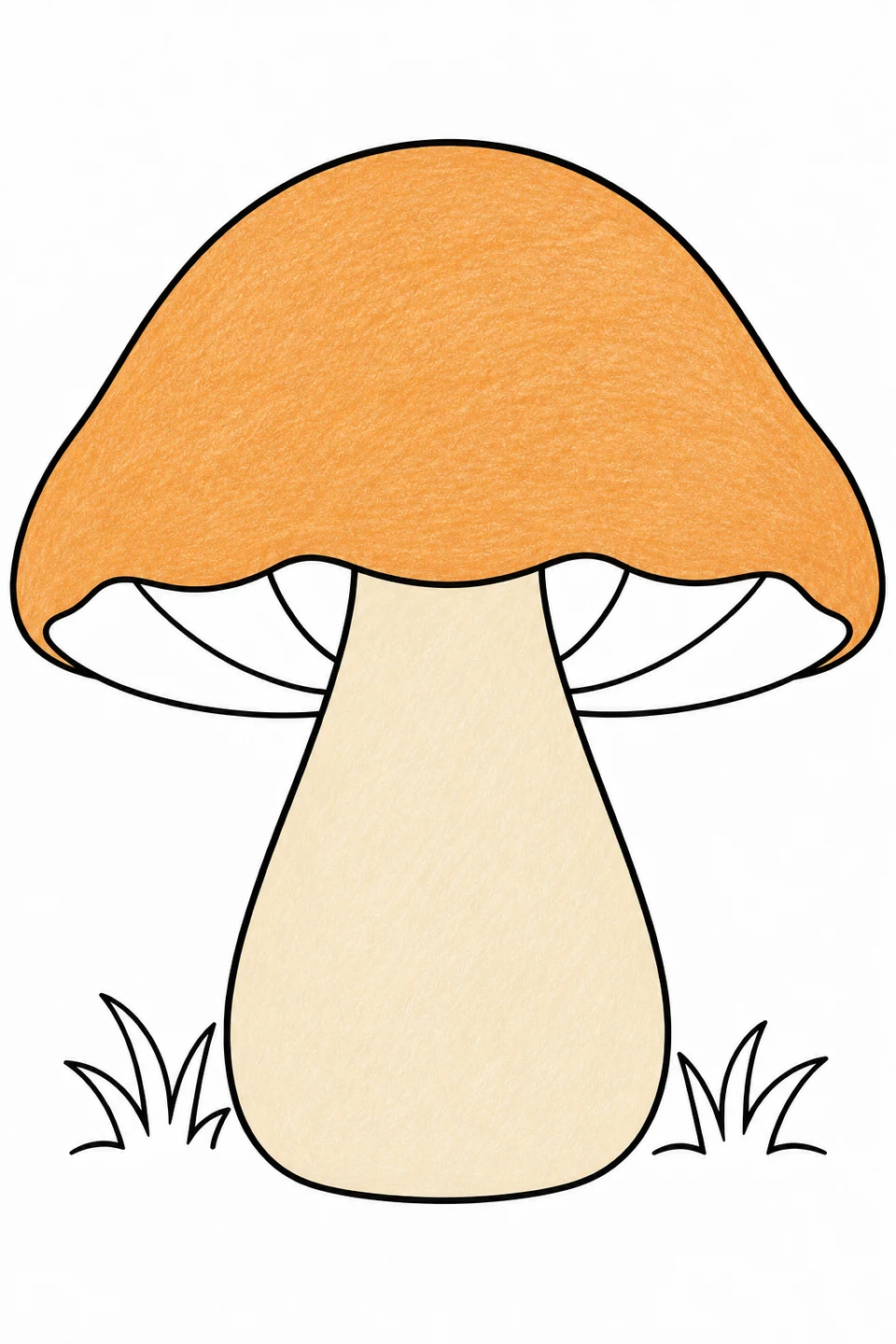
The orange cap, cream stem and white underside remain distinct. No background color is needed to finish this study.
Point to the cap, stem and underside on both drawings. These stylized pictures are for coloring and cannot identify mushrooms found outdoors.
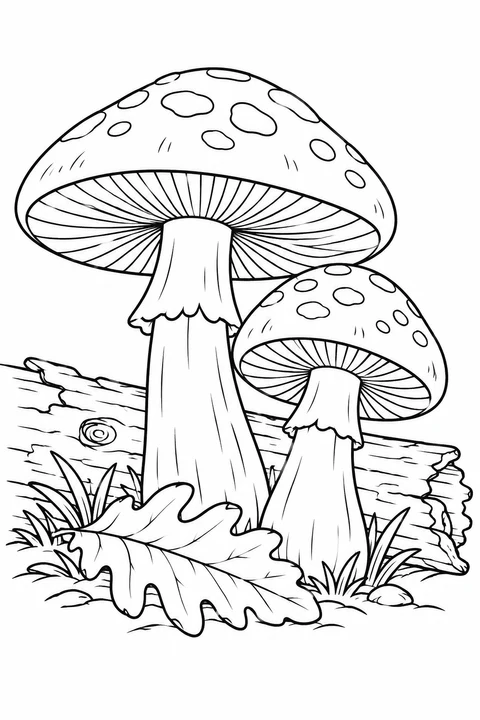
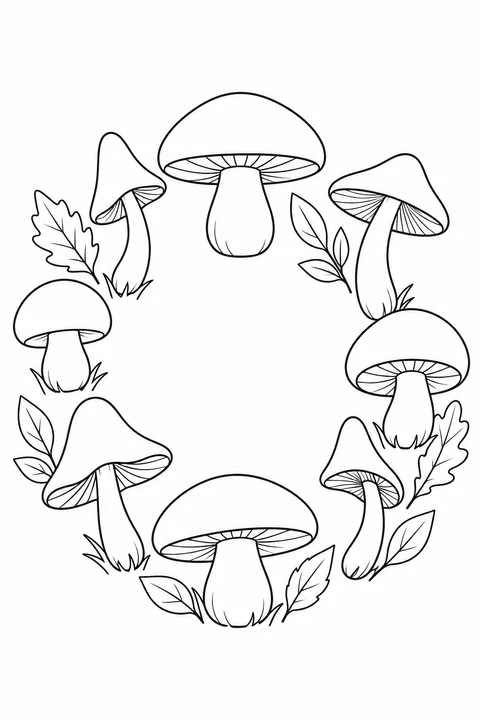
Start with the single large mushroom for broad areas. The groups and tilted caps include narrower lines underneath; the log scene adds bark and leaf veins. Try the ring of mushrooms for repeating colors, or choose a cottage to color doors, windows and a path.
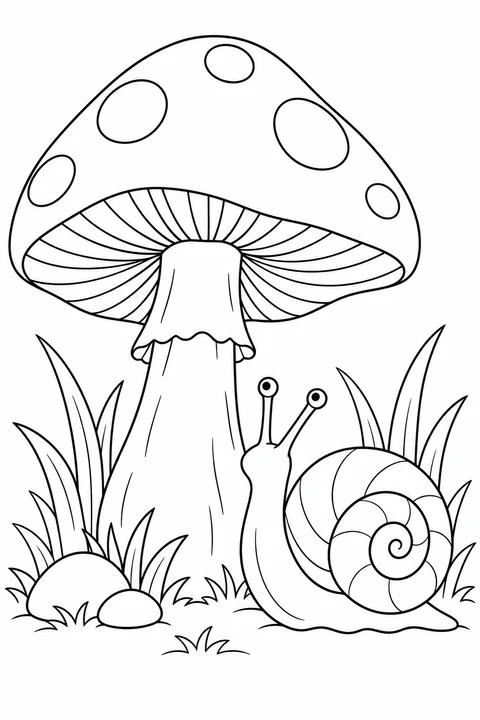
Print two pages and try the same two or three colors on both. Compare a plain cap with spots or repeating shapes. For a storybook scene, invent a name for the mushroom home and tell who might visit. These drawings are for coloring and imagination, not for identifying mushrooms outdoors.