
Turn Your Cat Photo into a Coloring Page
Turn a cat portrait or a favorite resting pose into a page to color. Choose between a face with readable whiskers and a whole-cat picture with a clear silhouette.
- Clean outlines
- Custom styles
- Adjustable detail
Checking your account…

See what your photo can become
My creations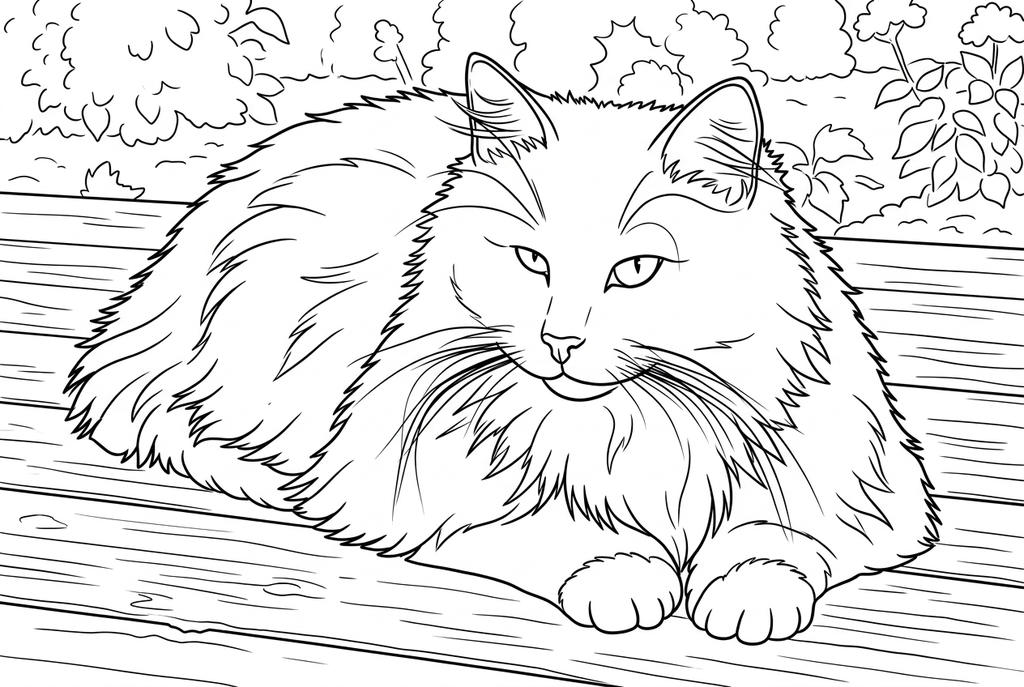
Generating your page
This result is temporary and has not been saved to your account.
Optional: save only the result to your account. Uses storage, not credits.
Match the paper size in your browser’s print dialog.
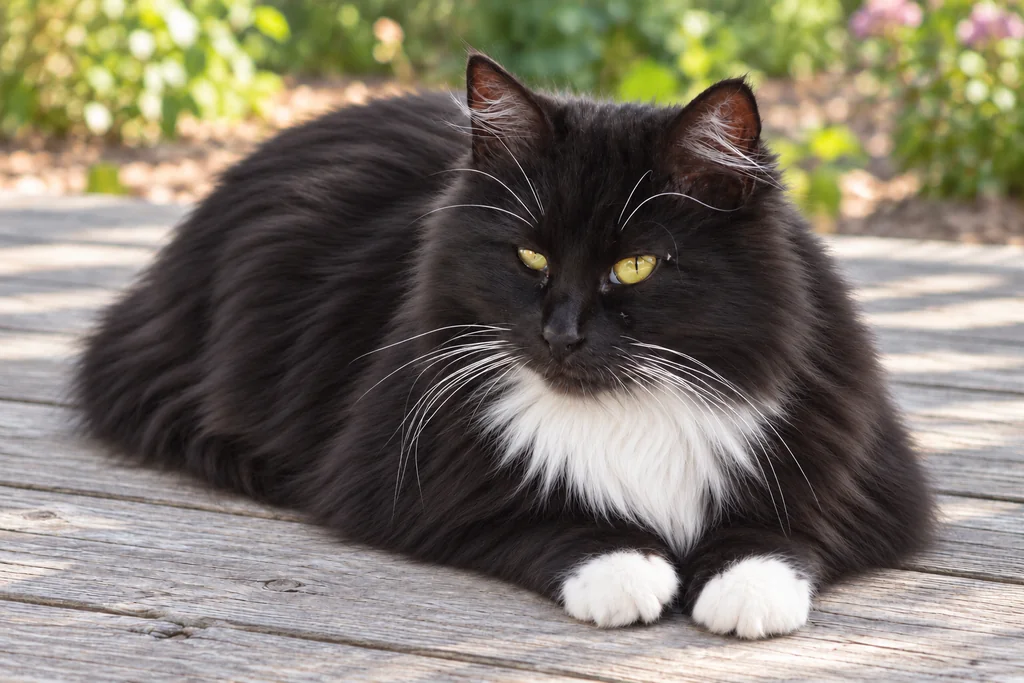
Original photo: PxHere · CC0 · AI edited · License
Redraw photo textures as clean outlines, with clearer shapes and open spaces for coloring.
- Compare simple fur shapes with finer coat detail
- Keep the resting pose and garden setting
- Print a portrait to color beside your original
Conversion status
You can leave this page and come back. Your AI task continues in the background.
Make space for whiskers, markings and a curled pose
Choose the part of the cat you want to recognize before changing detail.
Separate the face from its surroundings
Pick visible eyes and a nose, with whiskers away from blanket patterns. For a sleeping cat, check where the head, paws and tail overlap.
Compare markings with coloring spaces
Start with Classic and Medium detail for AI. Simple may open fluffy fur but merge stripes; Free can retain fine bedding texture too.
Review the cat beside the source
Inspect eyes, whiskers, tabby patches and the tail. Print a test before using the selected outline in a shared pet gallery.
Photo tips: Cat photos
- Look for eyes and a nose that stand out from surrounding fur.
- Keep whiskers away from a busy patterned background when possible.
- For a curled sleeping cat, check where the head, paws and tail overlap.
- Choose a photo with visible boundaries between the cat and bedding, especially for a light-colored coat.
Turn soft fur into clear shapes to color
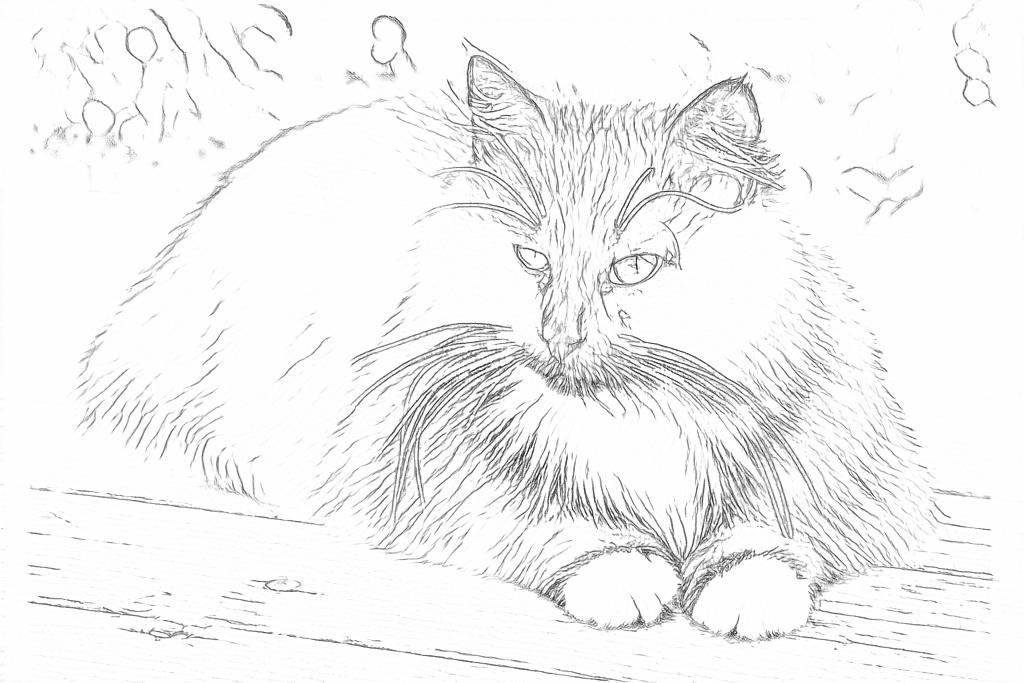
Free keeps many fine fur and whisker edges. This AI drawing groups the coat into larger tufts while retaining the resting pose, wooden boards and garden.
Free: follow the visible edges
AI: simplify the drawing for color
AI can redraw the eyes, whiskers and coat markings. Compare them with your original; the larger fur shapes in this result are a drawing choice.
Explore other AI drawing choices
Compare the starting point with two drawing choices from the same photo. Look at the shapes and lines, then use the settings beneath the result you prefer.
Starting point: AI can redraw the eyes, whiskers and coat markings. Compare them with your original; the larger fur shapes in this result are a drawing choice.
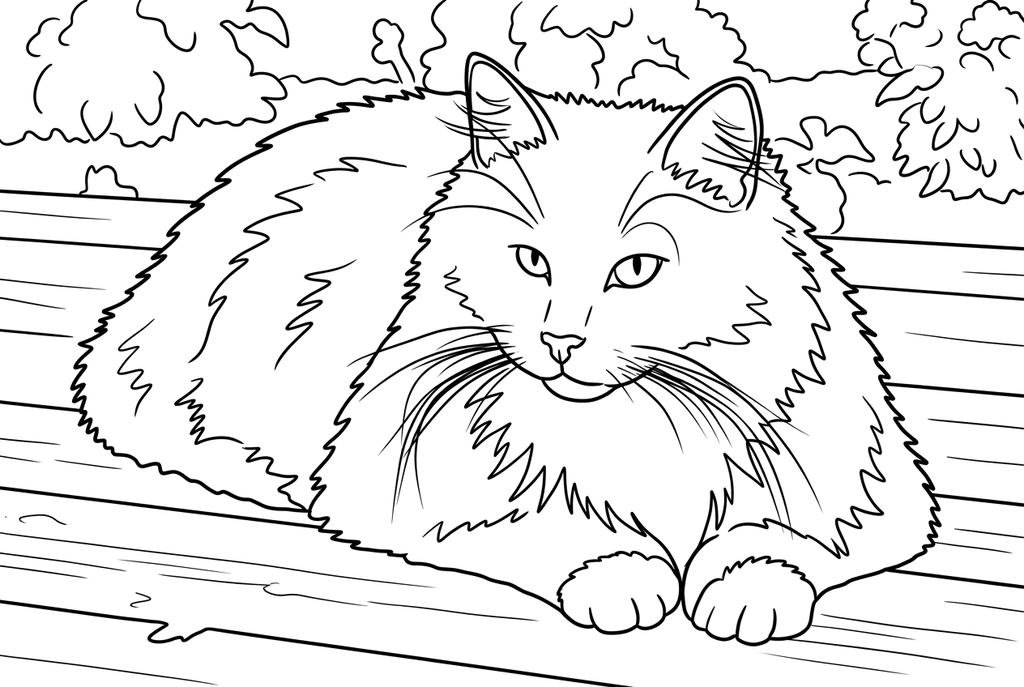
Broader chest and coat shapes leave fewer small spaces to color. Compare with the starting point and the Detailed result.
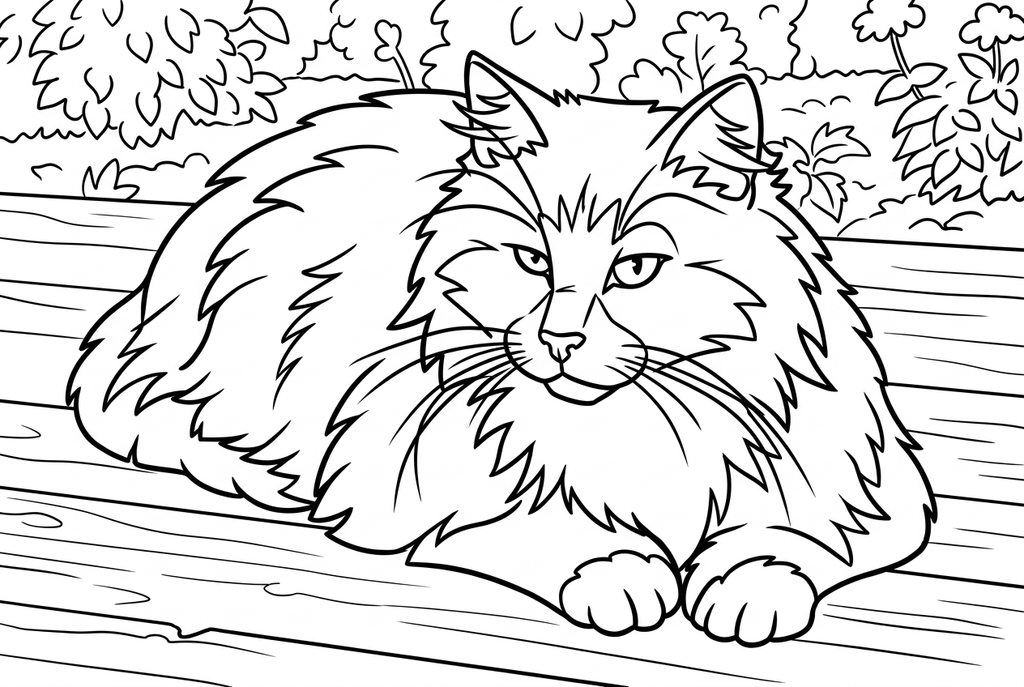
Comic uses sharper fur groups and more expressive eyes. The resting pose, boards and garden remain; check the coat markings against the photo.
See more results from this photo (1)
These are additional real conversions of the same source. Compare their settings and smaller features before choosing a drawing.
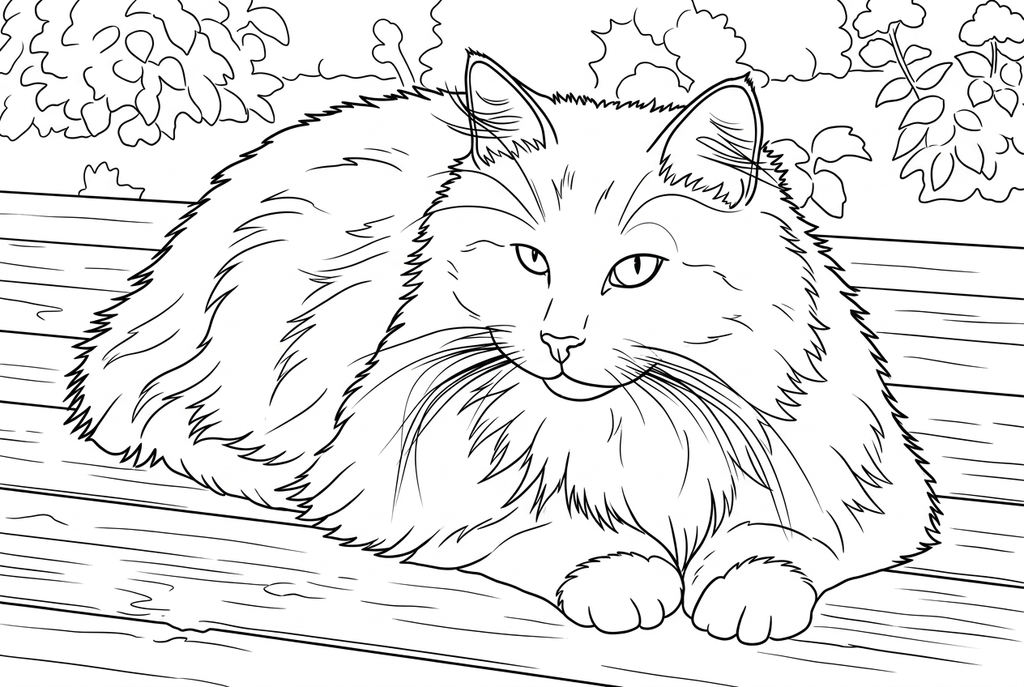
More small fur and garden marks than Simple. The difference from Medium is more modest; line thickness also varies between these real outputs.
Whiskers and eyes carry the expression
A sharp face gives you something to compare after conversion. Fine whiskers may be missed by Free, or reinterpreted in an AI redraw; they are worth checking before printing a close portrait.
Glare in the eyes and a hand near the face can change the shapes you see. Choose a photo where the expression is visible without relying on those reflections.
Tabby stripes and fluffy coats
- Classic
- Medium
- Standard
- Keep background
Medium detail is a useful AI starting point when coat markings matter. Simple can open crowded coloring areas, but it may merge stripes; Detailed may add more texture than you want to color.
Inspect the spaces between lines on the chest and cheeks. A bigger Free output can retain more edges, including unwanted blanket patterns; a cleaner source is still important.
A sleeping pose needs a readable outline
A curled cat can make an appealing page when its head and tail remain distinct. If they blend into one shape in the original, try another angle rather than expecting conversion to reconstruct the pose.
For a family display, keep the same cat photo and compare different color choices on printed copies. The activity is about interpretation, so an exact coat match is optional.
Check the drawing before making copies
Inspect the features that matter to this photo and its intended paper use.
Compare the eye shape, ears and whisker positions with the cat in the source.
Look at tabby markings and long fur for crowded lines or solid areas that are difficult to color.
Test a print around the paws and tail; overlapping sleeping poses may merge their boundaries.
Keep a result you can use again
Free: keep the file before leaving
Download the PNG or print on A4 or Letter. Conversion runs on your device; refreshing does not retain an unsaved result. Sign in only if you choose to save to My creations.
Free photo conversionAI: return to the finished task
Sign in and submit with the displayed credits. Open the saved result to download, export or print. Review the drawing beside your source before using it for the activity.
AI photo conversionPrint another copy of a selected result without generating again. A new AI submission uses credits. For a PDF from Free, use your browser's print-to-PDF option where available.
A ready-to-print page can work alongside your photo
These free coloring collections offer another picture for the activity, or a starting point when you do not want to use a photo.
Questions about Cat photos
Choose the part of the cat you want to recognize before changing detail.
Will all the whiskers be preserved?
No exact whisker count is guaranteed. Compare the face with the source, especially if the whiskers are very fine or cross a patterned background.
Which detail level keeps tabby markings?
Compare Medium with the actual result. Simple may merge patterns; Detailed may add crowded texture. The right choice depends on your photo and print size.
Can I use a sleeping-cat photo?
Yes. Choose one where the outline makes the head, paws and tail easy to tell apart.
Why does a pale cat disappear into the bedding?
Low contrast can hide the boundary in the original. Choose another angle or a darker, plainer background; a larger output cannot reliably recover an edge that is not visible.
Start with the photo you want to color
Choose the part of the cat you want to recognize before changing detail.