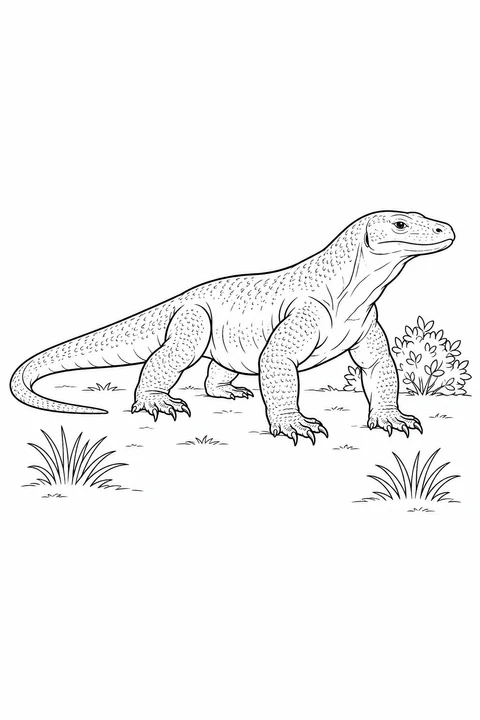
Komodo Dragon among Sparse Grass
medium

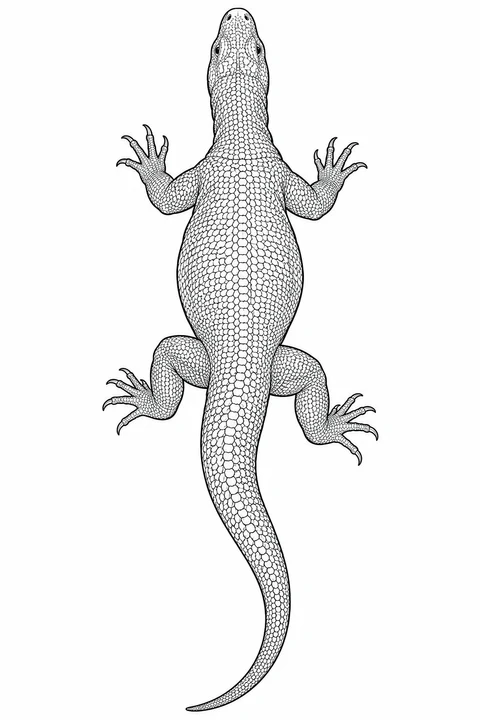
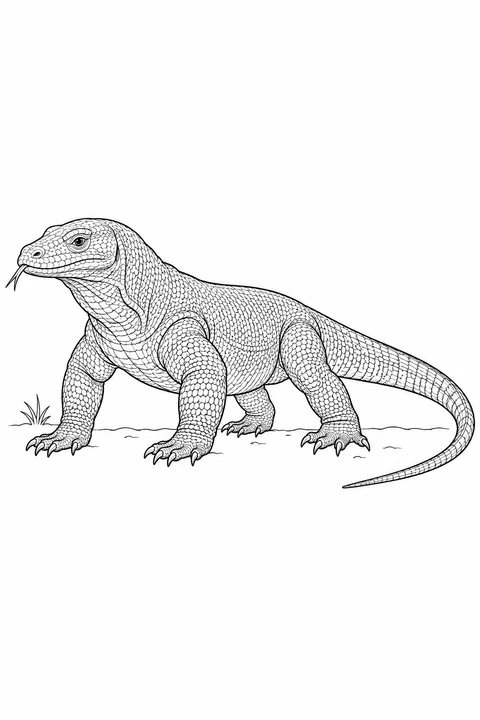
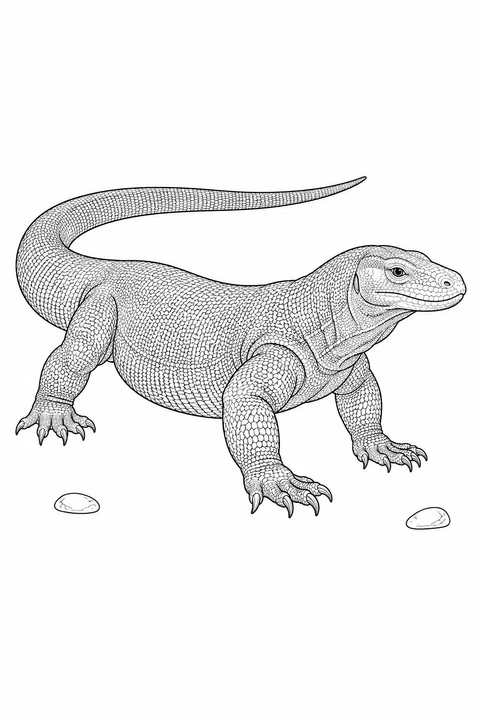
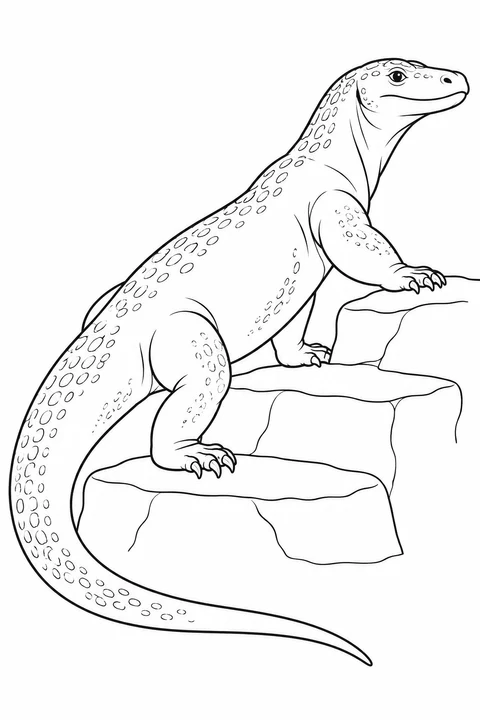
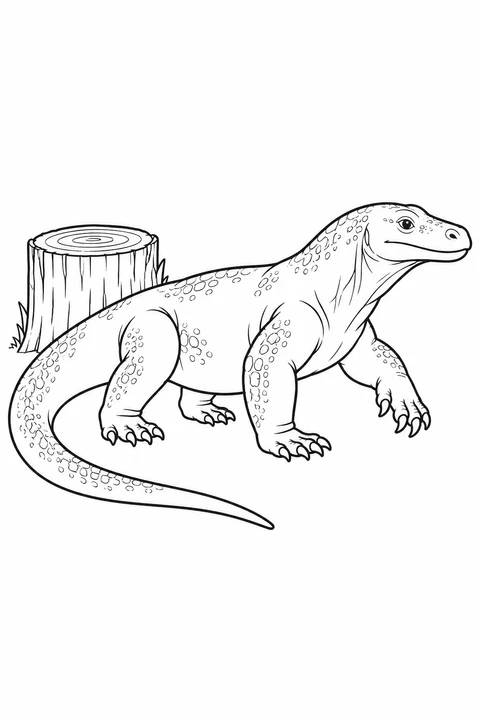
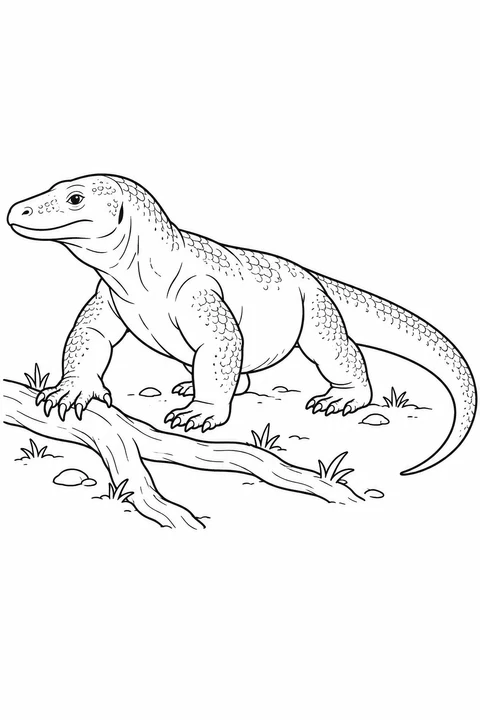
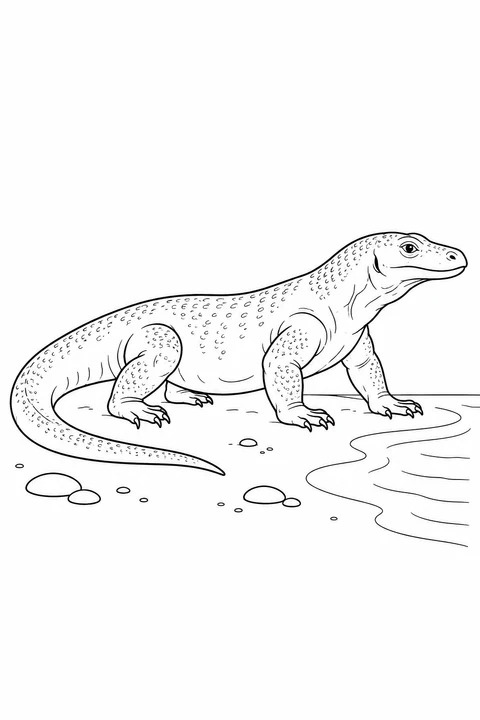
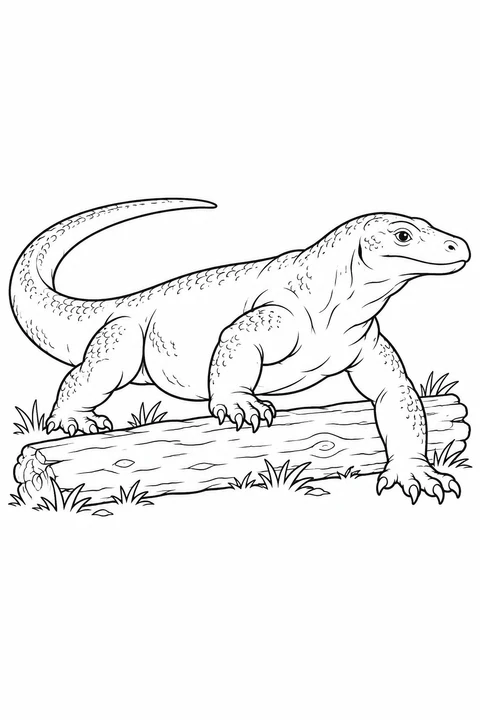
These drawings range from quiet ground poses to a climb over stone steps, a crossing over a fallen log and a foot resting on a round stone. An overhead view changes the outline, while the paired page lets you compare two directions. Look at the neck, tail and foot placement to find the composition you want.
medium
detailed
medium
detailed
detailed
detailed
medium
medium
detailed
medium
medium
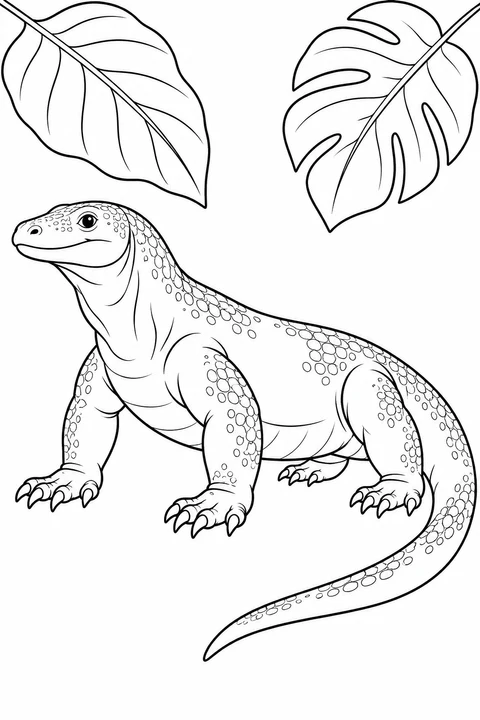
medium
Look at the space between the scale marks, not just the size of the animal.
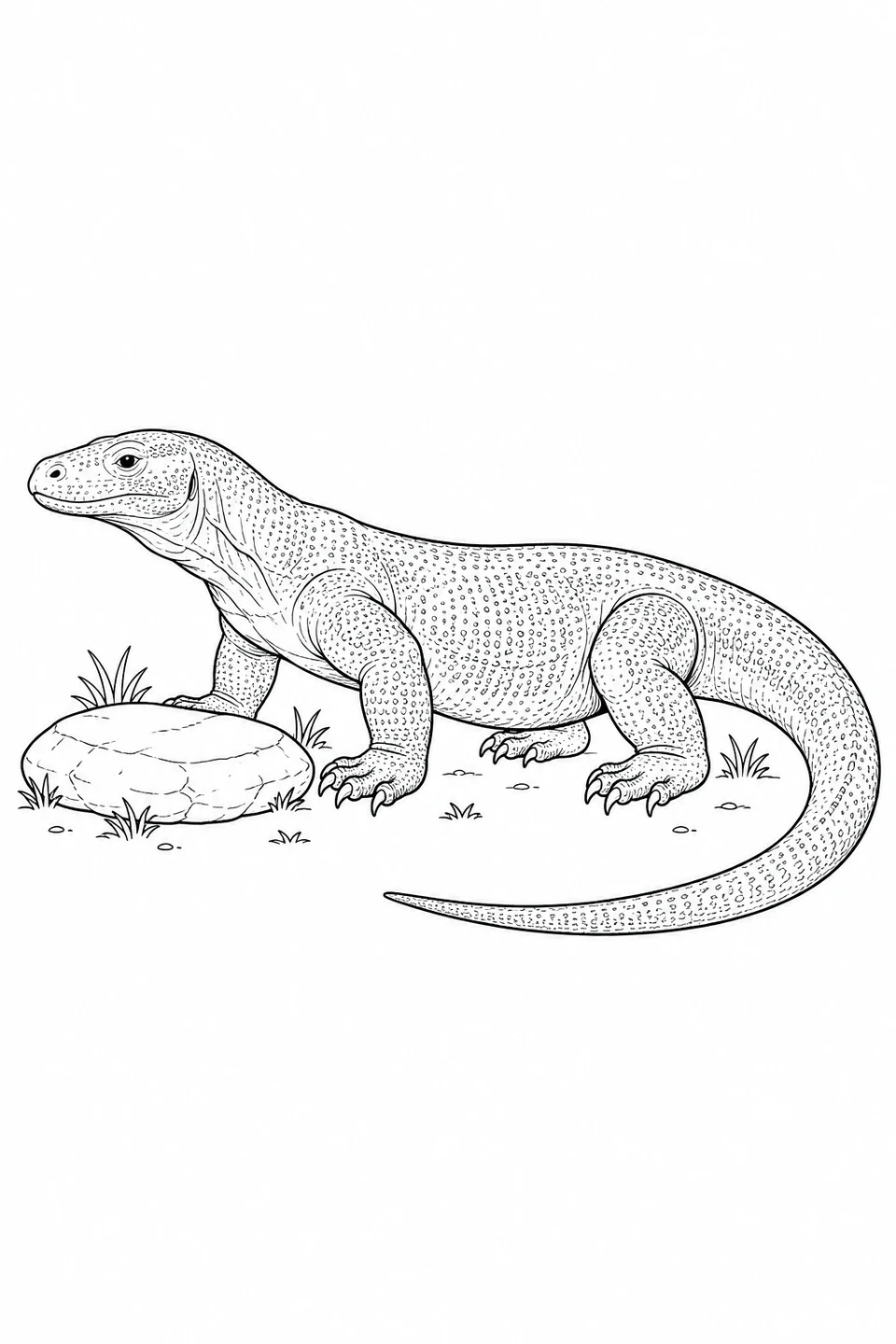
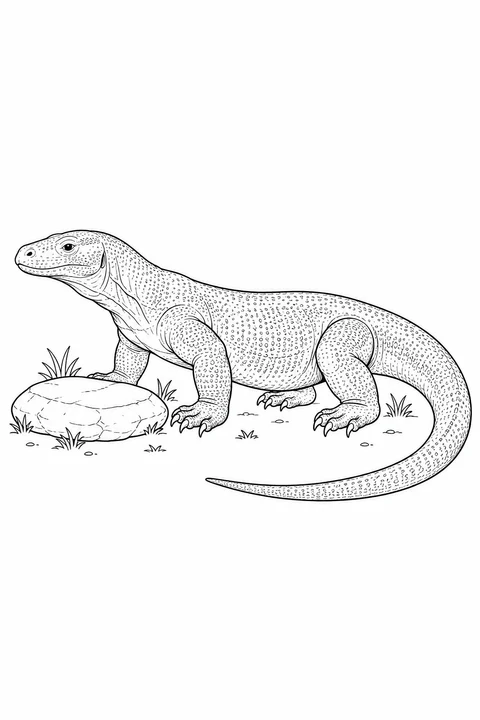
A low rock and grass separate from the long body; color them as broad groups.
Komodo Dragon beside a Low Rock →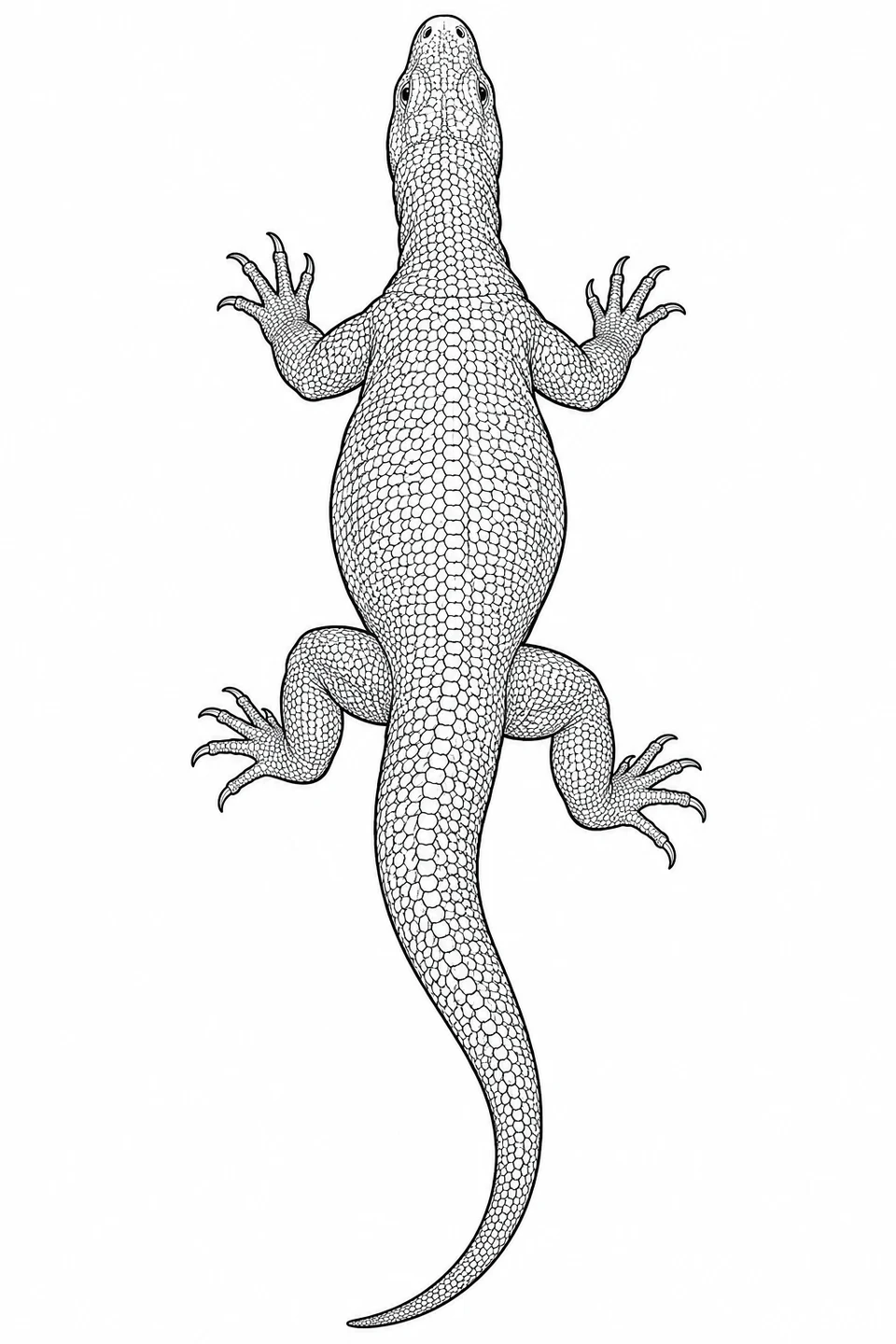
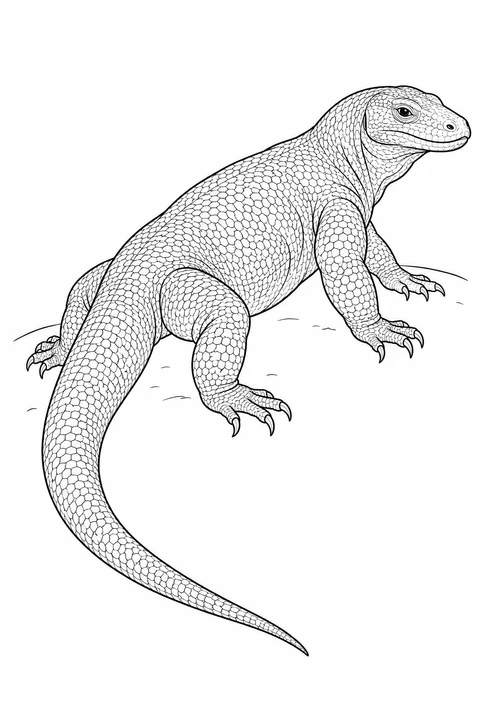
The overhead view has many small enclosed scales. Pick this for a longer, detailed session.
Komodo Dragon Viewed from Above →Print the original line drawing linked below. The numbered areas match the color key and steps; use the colored example as a starting point, then choose your own colors if you prefer.
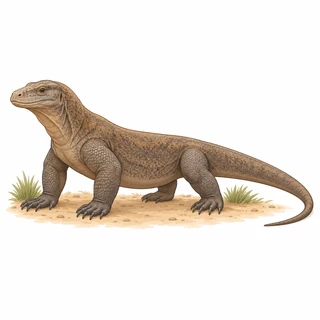
Digital coloring example
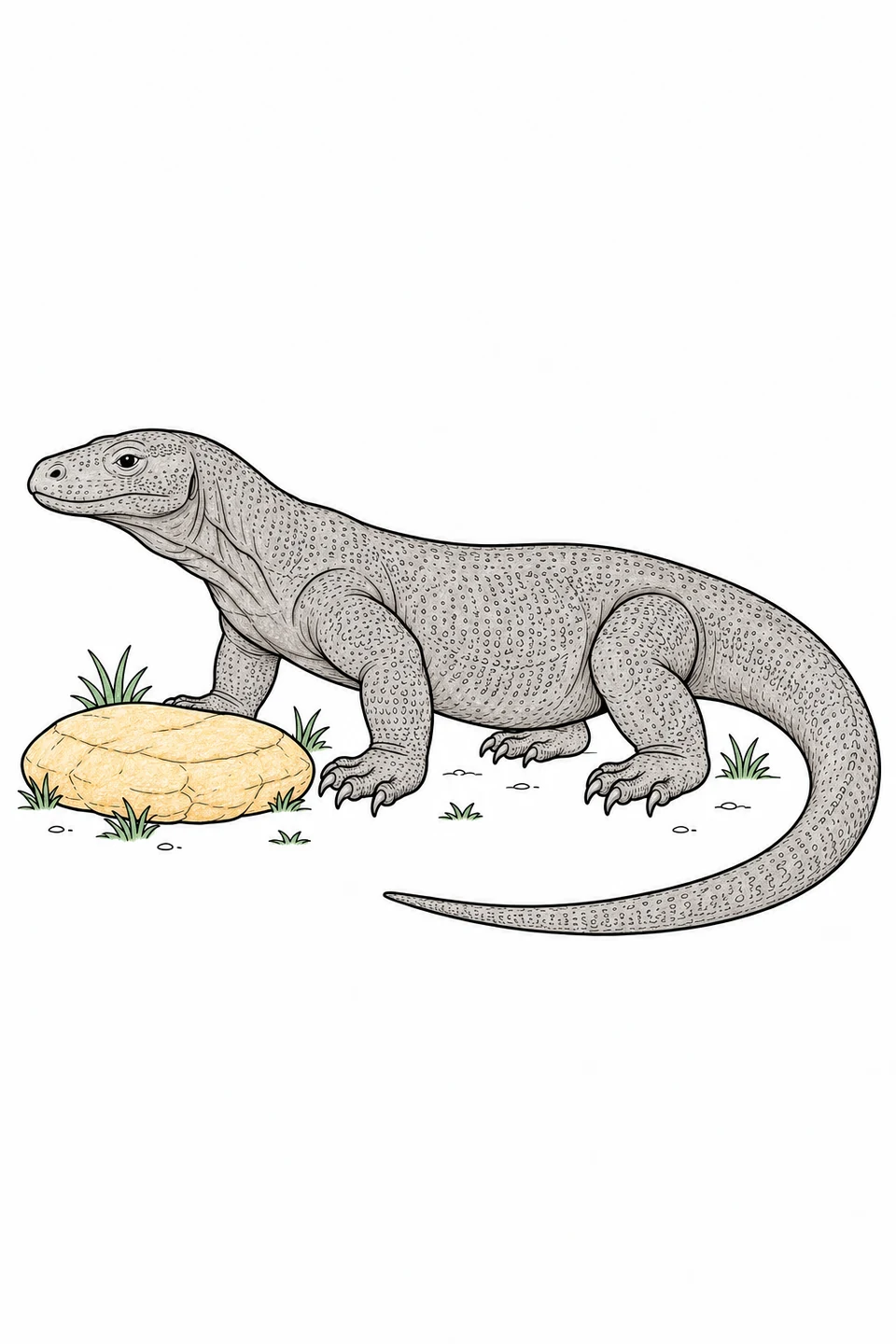
The rock, grass and scaled body should be easy to distinguish without coloring every tiny scale separately.
For fewer surroundings, choose a single animal with a simple ground line or a few pebbles. The leaf and shoreline pages add larger background shapes; root, stump and log scenes include wood lines. For smaller sections, look at the scale-rich drawings or the two stone slabs. The paired page adds a second complete animal rather than extra scenery.
Before coloring on paper, follow the outline from the snout along the neck to the tail tip with your eyes, then find where each visible foot rests. Use separate colors for the animal and its stone or wood support. On the paired page, keep one color sequence on both bodies and compare their directions. Selected pages can go in the print list for a combined print or PDF.